Complete Heatwave Safety Guide for Dogs: Temperature Thresholds, Paw Protection and Emergency First Aid
8|8|
9|9|
10|
11|You want to give your dog the exercise they crave, but the thermometer is climbing. Whether your dog has a psychological block that requires long walks to poop or just high energy, a 90°F+ heatwave turns a simple outing into a dangerous risk.
12|10|
13|11|Many owners feel stuck between their dog’s behavioral needs and the physical danger of the heat. You can meet those needs without risking heatstroke.
14|12|
15|13|## At What Temperature Is It Too Hot to Walk Your Dog?
16|14|
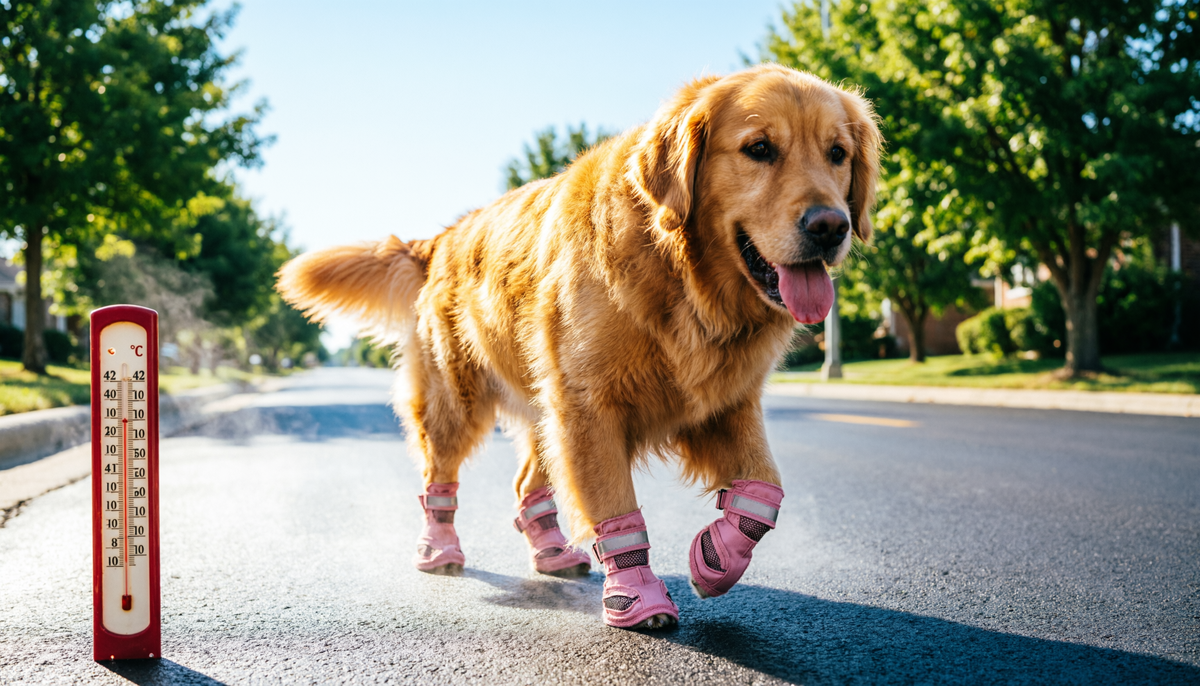
17|15|Exercise caution once air temperatures exceed 80°F (26.7°C). When the air hits 86°F, pavement temperatures can skyrocket to 135°F.
18|16|
19|17|Pavement at 125°F or higher can cause burns in as little as 60 seconds. Always perform the 7-second hand test—press the back of your hand to the ground—before every walk. If you cannot hold it for seven seconds, it is too hot for paws.
20|18|
21|19|Humidity makes these thresholds even more dangerous. Dogs rely on panting for cooling, but high humidity blocks this evaporative process.
22|20|
23|21|## High-Risk Dogs: Who Needs Extra Care?
24|22|
25|23|Certain breeds and physical traits increase the risk of overheating. Brachycephalic breeds, including Pugs, Bulldogs, Frenchies, and Shih Tzus, struggle more with airflow and cooling.
26|24|
27|25|Coat color affects heat absorption—black fur absorbs more solar radiation, which can lead to higher surface temperatures. However, studies show no significant difference in core body temperature between black and light-coated dogs. Instead of focusing on color, prioritize monitoring your dog’s behavior, weight, and age to assess overheating risk.
28|26|
29|27|Seniors, puppies, and overweight dogs also face higher risks. These dogs require extra monitoring and more frequent breaks, water, and shade.
30|28|
31|29|## The Best and Worst Times to Walk Your Dog in a Heatwave
32|30|
33|31|Plan your walks before 10 AM or after 4 PM to avoid peak intensity. If temperatures exceed 90°F, skip the outdoor walk entirely.
34|32|
35|33|Remember that pavement can retain heat well into the night. Always check the ground temperature even after the sun goes down.
36|34|
37|35|If your dog needs to move but the outdoors are lethal, use air-conditioned alternatives. Dog-friendly stores like Home Depot, Lowe’s, Michaels, and local pet stores provide a safe, cool environment for walking.
38|36|
39|37|For indoor stimulation, try treadmill training, nose work, indoor fetch, or a frozen Kong. Some owners find that a car ride can help expedite the bathroom process for dogs that struggle to go without long walks.
40|38|
41|39|## Paw Protection: Boots for Every Size
42|40|
43|41|Finding boots that stay on giant paws is a common struggle for owners of large breeds, such as 100lb German Shepherds. To ensure a fit, create a paw tracing on paper before purchasing.
44|42|
45|43|For large dogs, Ruffwear Grip Trex (available in separate pairs for front and back) offers a secure fit. Canada Pooch Hot Pavement Boots and Pawtrexx Summer boots with double Velcro are also effective options.
46|44|
47|45|Boots are essential in extreme heat, as pavement burns happen quickly. They provide a physical barrier between the paw pad and the scorching asphalt.
48|46|
49|47|## Hydration: Why Your Dog Refuses the Water Bowl
50|48|
51|49|Some dogs refuse their water bowls after walks, preferring a human’s water bottle. The material of the bowl may be the problem; switch to stainless steel bowls and avoid plastic.
52|50|
53|51|Provide multiple bowls throughout the home and consider water fountains to encourage drinking. You can also offer ice cubes or low-sodium broth ice cubes as hydrating treats.
54|52|
55|53|A dog typically needs 1oz of water per pound of body weight per day. During a heatwave, significantly increase water availability and monitor your dog’s intake throughout the day.
56|54|
57|55|Watch for signs of dehydration:
58|56|- Skin tenting (skin doesn’t snap back when pulled)
59|57|- Dry, sticky gums
60|58|- Lethargy
61|59|- Thick saliva
62|60|
63|61|## Recognizing Heatstroke: The Progression From First Signs to Emergency
64|62|
65|63|Heatstroke happens rapidly. It typically follows a specific progression:
66|64|1. Heavy panting
67|65|2. Red gums
68|66|3. Excessive drooling
69|67|4. Vomiting
70|68|5. Collapse
71|69|6. Seizures
72|70|
73|71|If you see these signs, your dog is in a medical emergency. Immediate action is required to lower their core temperature.
74|72|
75|73|## First Aid: What to Do If Your Dog Overheats
76|
77|
 78|74|
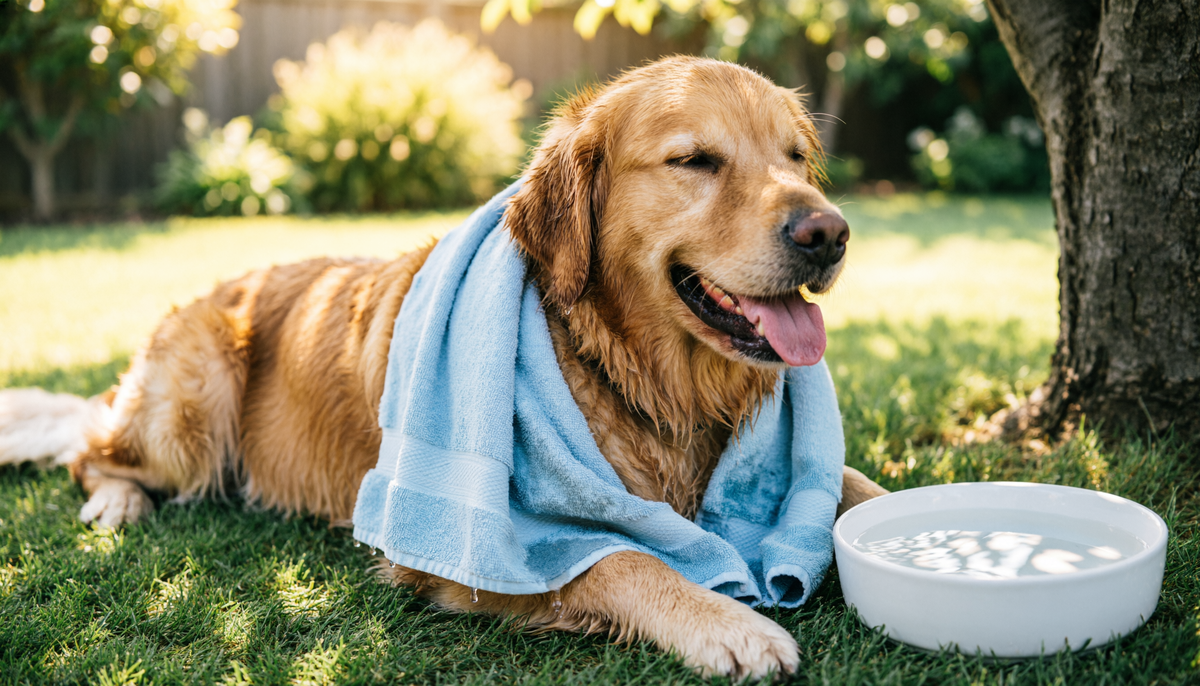
79|75|Move your dog to the shade or an air-conditioned room immediately. Apply wet, COOL towels to the neck, groin, and paws.
80|76|
81|77|Use a fan to increase airflow over the wet towels. Offer water, but do not force it.
82|78|
83|79|NEVER use an ice bath, as this can be counterproductive. After providing initial cooling, transport your dog to an emergency vet immediately.
84|80|
85|81|## Cooling Products That Actually Work
86|82|
87|83|Vests can provide hours of relief. The Ruffwear Swamp Cooler is top-rated and fits brachycephalic breeds well. The GF Pet Elastofit Ice Vest can provide cooling for 4-6 hours.
88|84|
89|85|Cooling gel mats offer a cold surface for dogs to lounge on indoors. You can also manually release heat by wetting your dog’s paws and ears.
90|86|
91|87|## Multi-Day Fireworks Anxiety: Preparing for July 4th Weekend
92|88|
93|89|Heatwaves often coincide with holiday fireworks, which can span several days (e.g., July 3-6). Multi-day medication is possible but requires veterinary guidance.
94|90|
95|91|Sileo can be repeated every two hours, up to five times per event. Other options include trazodone (administered 2-3 hours before the noise) or a gabapentin combination.
96|92|
97|93|Always trial all medications on a calm day first to see how your dog reacts. Update your dog’s microchip information before the holiday weekend begins.
98|94|
99|95|Create a safe den using a crate and blankets. Close the curtains and use white noise to mask the sound of explosions.
100|96|
101|97|## Quick Reference Card
102|98|
103|99|Temperature Thresholds
104|100|- >80°F: Exercise caution
105|101|- 86°F Air: Pavement can hit 135°F
106|102|- 125°F Pavement: Burns occur in 60 seconds
107|103|- >90°F: Skip outdoor walks
108|104|
109|105|The 7-Second Test
110|106|Press the back of your hand to the pavement. If you cannot hold it for 7 seconds, it is too hot for your dog.
111|107|
112|108|Heatstroke First Aid
113|109|1. Move to shade/AC
114|110|2. Apply COOL wet towels to neck, groin, and paws
115|111|3. Use a fan
116|112|4. Offer water
117|113|5. NO ICE BATHS
118|114|6. Go to emergency vet
119|115|
120|116|## Sources
121|117|- AKC: Summer Safety Tips
122|118|- VCA Hospitals: Heatstroke in Dogs
123|119|- PetMD: How Hot Is Too Hot for Dogs?
124|120|- FDA/DailyMed: Sileo Label
125|121|- Ruffwear: Swamp Cooler Product Page
126|122|- GF Pet: Elasto-Fit Ice Vest
127|123|
78|74|
79|75|Move your dog to the shade or an air-conditioned room immediately. Apply wet, COOL towels to the neck, groin, and paws.
80|76|
81|77|Use a fan to increase airflow over the wet towels. Offer water, but do not force it.
82|78|
83|79|NEVER use an ice bath, as this can be counterproductive. After providing initial cooling, transport your dog to an emergency vet immediately.
84|80|
85|81|## Cooling Products That Actually Work
86|82|
87|83|Vests can provide hours of relief. The Ruffwear Swamp Cooler is top-rated and fits brachycephalic breeds well. The GF Pet Elastofit Ice Vest can provide cooling for 4-6 hours.
88|84|
89|85|Cooling gel mats offer a cold surface for dogs to lounge on indoors. You can also manually release heat by wetting your dog’s paws and ears.
90|86|
91|87|## Multi-Day Fireworks Anxiety: Preparing for July 4th Weekend
92|88|
93|89|Heatwaves often coincide with holiday fireworks, which can span several days (e.g., July 3-6). Multi-day medication is possible but requires veterinary guidance.
94|90|
95|91|Sileo can be repeated every two hours, up to five times per event. Other options include trazodone (administered 2-3 hours before the noise) or a gabapentin combination.
96|92|
97|93|Always trial all medications on a calm day first to see how your dog reacts. Update your dog’s microchip information before the holiday weekend begins.
98|94|
99|95|Create a safe den using a crate and blankets. Close the curtains and use white noise to mask the sound of explosions.
100|96|
101|97|## Quick Reference Card
102|98|
103|99|Temperature Thresholds
104|100|- >80°F: Exercise caution
105|101|- 86°F Air: Pavement can hit 135°F
106|102|- 125°F Pavement: Burns occur in 60 seconds
107|103|- >90°F: Skip outdoor walks
108|104|
109|105|The 7-Second Test
110|106|Press the back of your hand to the pavement. If you cannot hold it for 7 seconds, it is too hot for your dog.
111|107|
112|108|Heatstroke First Aid
113|109|1. Move to shade/AC
114|110|2. Apply COOL wet towels to neck, groin, and paws
115|111|3. Use a fan
116|112|4. Offer water
117|113|5. NO ICE BATHS
118|114|6. Go to emergency vet
119|115|
120|116|## Sources
121|117|- AKC: Summer Safety Tips
122|118|- VCA Hospitals: Heatstroke in Dogs
123|119|- PetMD: How Hot Is Too Hot for Dogs?
124|120|- FDA/DailyMed: Sileo Label
125|121|- Ruffwear: Swamp Cooler Product Page
126|122|- GF Pet: Elasto-Fit Ice Vest
127|123|